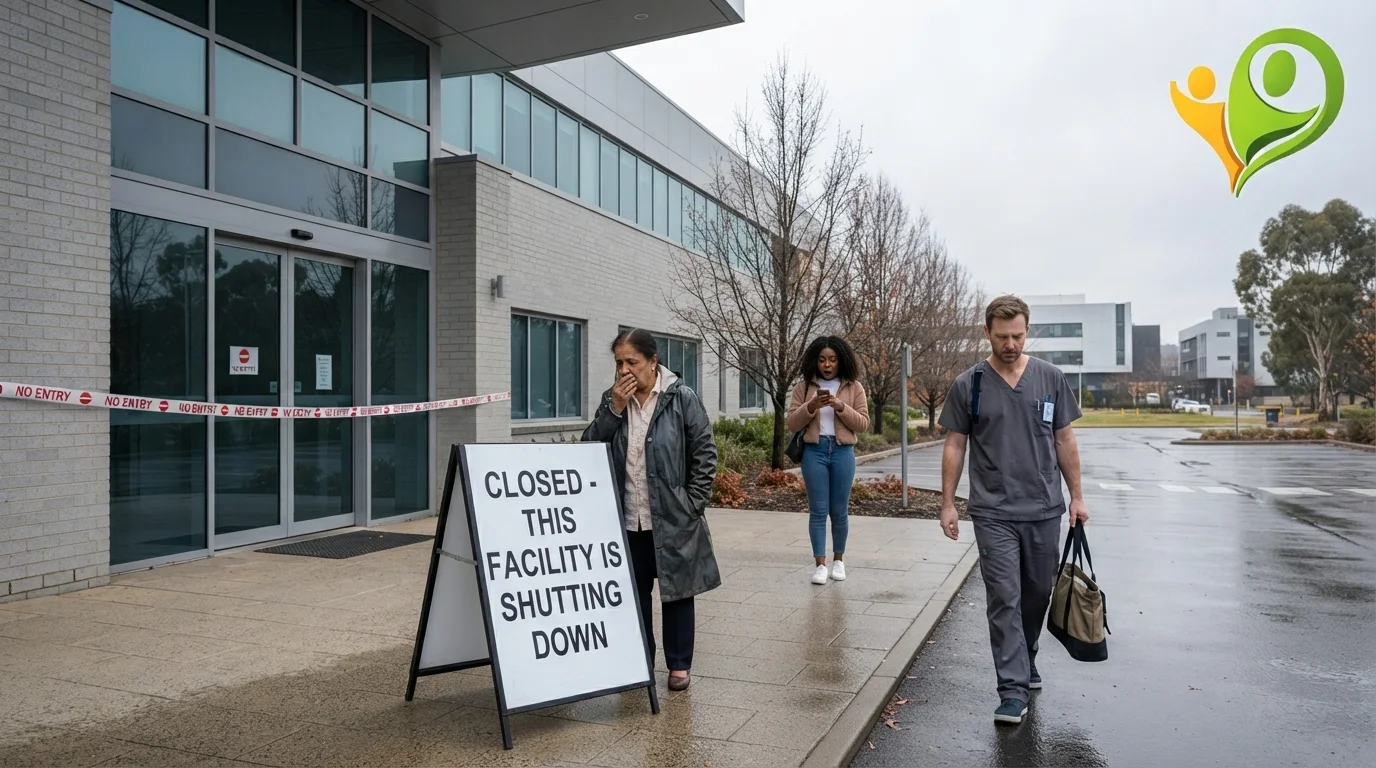
Canberra’s private health sector is facing another setback, with news that Canberra Private Hospital in Deakin will be closing its doors later this year. The announcement adds to a growing list of challenges facing private healthcare providers across the country, and comes as another reminder of just how financially fragile the sector has become.
What happened
The hospital, based at the Equinox Business Park in Deakin, will shut down after its operator, Nexus Hospitals, made the difficult call that the facility could no longer be run viably. While a precise closure date hasn’t been locked in just yet, Nexus has indicated the hospital is expected to close its doors in September. Canberra Private Hospital first opened back in 2011, meaning it will have served the Canberra community for well over a decade by the time it shuts.
Why it’s closing
Nexus Hospitals chief executive Greg Hall confirmed the closure, explaining that the facility was simply no longer financially sustainable to keep running. He noted that this isn’t a problem unique to Canberra Private Hospital, pointing out that many private hospitals around Australia are currently grappling with similar financial pressures. According to Hall, the company’s main priority now is to maintain the same high standard of patient care the hospital has been known for over the years, while doing everything possible to minimise disruption for patients as the closure date draws closer. Further details are expected to be shared with patients and the wider community as more information becomes available in the lead-up to the closure.
Part of a wider trend
Unfortunately, this isn’t an isolated incident. It follows closely on the heels of the widely reported collapse of Healthscope, which saw multinational operator Ramsay Health Care step in late last year to purchase the National Capital Private Hospital in Garran for a substantial $251 million. Taken together, these two developments paint a clear picture of the mounting financial strain facing Canberra’s private hospital sector, driven by a combination of rising operating costs, staffing pressures, and shifting patterns in how and where people choose to access healthcare.
What this means for the community
For everyday Canberrans, these closures carry real consequences. As more private facilities either shut down or change ownership, many residents may find themselves relying more heavily on public health services or community-based support to fill the gap left behind. This shift is particularly relevant for older Australians and NDIS participants, who often depend on continuity of care, familiar providers, and clear, timely communication when navigating changes to their healthcare arrangements. In times like these, having access to reliable, locally based support becomes even more important, helping people feel less overwhelmed by the wider upheaval taking place across the health system.
Source: The Canberra Times
You may also like:
Canberra’s City Health Centre Closure Extended Until August: What You Need to Know